Most tradies benefit from a website once they want enquiries beyond their existing referrals. But you do not need one just because you have an ABN. If you are fully booked through a builder, still deciding which work to take on, or watching every dollar at startup, a website may reasonably wait.
A useful website gives your customer a place to check what you do, where you work and how to reach you. That is a practical job. Whether it is worth paying for depends on how much you need that job done.
When is a website worth it?
A website becomes useful when people hear your name but need more information before calling. A referral tells someone you are worth considering; your site can show whether you do the work they actually need.
For example, a landscaper might want more small paving and garden tidy-up work, rather than full garden redesigns. Clear service descriptions and a few genuine photos help your customer decide whether to make an enquiry. This is an illustrative situation, not a reported result from an AllTradie build.
You have a stronger reason to invest if:
- You want work directly from your own customers rather than relying on one contractor.
- You keep answering the same questions about services, suburbs or availability.
- Your Facebook page has job photos but your service information is hard to find.
- You are spending money sending people somewhere online and need a page that answers their questions.
None of this means a site automatically brings work. It needs accurate information, a clear way to contact you and a way for people to find it.
Are Facebook and Google Business Profile enough?
They can be enough to get started. Google Business Profile is free and gives eligible businesses a presence on Search and Maps. Keep your phone number, service area, hours and photos current. Use an account you control.
Facebook is useful for showing recent work and staying visible to people who already follow you. It also gives you somewhere to send someone who asks to see job photos. If that is all you need today, keeping it current may be a better first step than buying a site.
The limitation is how much control you have over the presentation and the path to an enquiry. On your own website you can put your services, areas, photos and contact details in a predictable order. Your customer does not have to piece them together from older posts.
| Channel | Useful for | What to watch |
|---|---|---|
| Google Business Profile | Local discovery, hours, reviews and phone calls | Eligibility, verification and accurate information |
| Recent job photos and conversations with your audience | Important service details can be spread across posts | |
| Your website | A clear explanation of your work and a place for enquiries | Build cost, maintenance and keeping information current |
These channels can work together. Your profile can link to the site, and the site can give a referred customer more detail than a short listing.
Does a website help you show up on Google?
A website gives Google pages it can read about your services. It is also somewhere your customer can land after finding you. It does not buy a position in search results.
Google describes local ranking in terms of how well your business matches a search, how far away it is and how well known it is. Accurate profile information and reviews matter too. A website cannot remove the distance between you and someone searching across town.
Be wary of a promise to put you first on Google. Ask what work is actually included: useful service pages, accurate titles, a sitemap and help keeping your profile consistent are checkable tasks. A guaranteed position is a different claim.
AllTradie's Google Business Profile help sits alongside the website build. It carries no promise of rankings or a set number of enquiries.
What should a useful tradie website contain?
Start with information your customer needs to decide whether to call you:
- Services: name the work you take on and any important exclusions.
- Service area: list the suburbs or regions you actually cover.
- Contact details: a phone link and a short enquiry form that works on a phone.
- Your work: genuine photos you have permission to use, with enough explanation to understand the job.
- Business details: your trading name and relevant licence or registration information, checked for your trade.
- What happens next: say how you handle an enquiry and whether a site visit is needed before you can price the work.
Keep the wording specific. “Blocked drains, leaking taps and hot-water repairs in Adelaide's western suburbs” tells someone more than a broad claim about quality service. Only list work you are qualified and willing to do.
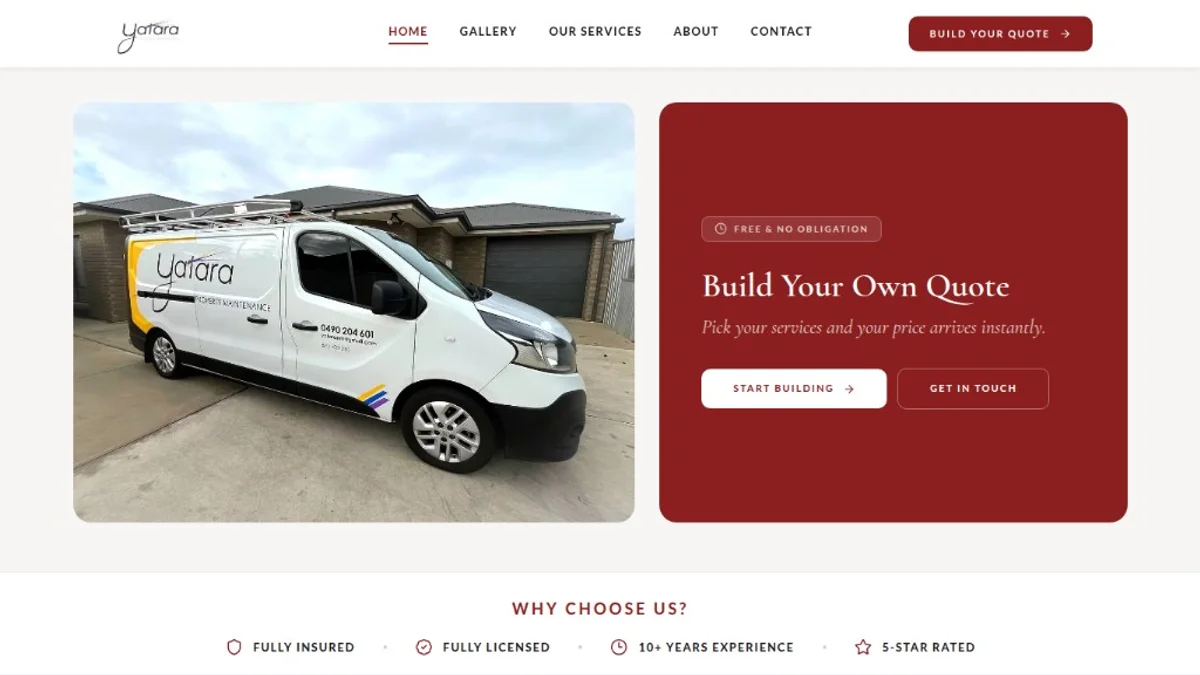
Online quoting is optional. It suits work you can define and price from your own price list. Jobs with unknown access, damage or site conditions may still need a conversation or visit. A short enquiry form is often the right starting point.
When should a new tradie spend the money?
Invest once you can explain which work you want, where you will travel and how you will handle enquiries. Gather your service list, contact details and usable job photos first. Paying a developer before those decisions are made can add rewriting and delays.
You do not need to start with a large site. A small, accurate one can cover your core services and give referrals somewhere useful to land. Add more detail when it answers a real question or supports work you want to take on.
Our guide to Australian website costs explains how to compare a DIY subscription with a paid build and the monthly costs that follow it.
When is a website not the best use of money yet?
Wait if your equipment, insurance or ability to deliver the work needs the money more urgently. The same applies if you are at capacity and happy with the work you already have. A new site is unlikely to solve a problem you do not have.
If you already have a site, check whether it needs a repair rather than a replacement. Correcting a phone number, clarifying a service area or making an enquiry form work may be enough. Ask a developer to explain what the rebuild would improve before agreeing to it.
A DIY site is also a reasonable option if you have time to write it, check it on a phone and keep it current. Paying someone makes more sense when that work would keep slipping behind your paid jobs.
If you decide a build is useful, see what an AllTradie website includes. You work directly with the Adelaide developer who builds it and handles ongoing changes.
Sources and review
Reviewed on 27 October 2026. This article gives practical editorial advice; the examples are illustrative. Google's own guidance supports the information about its profile and local search: